
Paint colors for kitchen walls and cabinets are easier to choose when you start with the light in the room, not the fan deck. In a Sidney kitchen, daylight, cabinet tone, countertop colour, backsplash, and artificial lighting can all shift how a paint sample reads from morning to evening.
This guide uses a light-first approach: check the daylight, decide what role the walls should play, compare the fixed finishes, then test the wall and cabinet colours together before approving the palette.
Start With Three Light Checks
Kitchen colour should be judged under the light the room actually receives. Before comparing paint names, check three conditions.
A shade that feels balanced in one condition can shift when the lighting changes, so the final sample needs to work across all three.
Decide the Wall Colour’s Role Before Choosing the Shade
The wall can do one of three jobs in a kitchen.
Choosing the role first keeps you from picking a colour simply because it looks good on a sample card.
What the 2026 Kitchen Research Supports
The National Kitchen & Bath Association 2026 Kitchen Trends Report found neutrals leading kitchen colour preferences, followed by greens and blues.
The report also found that statement colour is often appearing on backsplashes, wallpaper, islands, and decorative accessories. Natural wood grain is also gaining attention in cabinetry.
That supports a layered kitchen palette. The walls do not need to carry every colour decision by themselves.
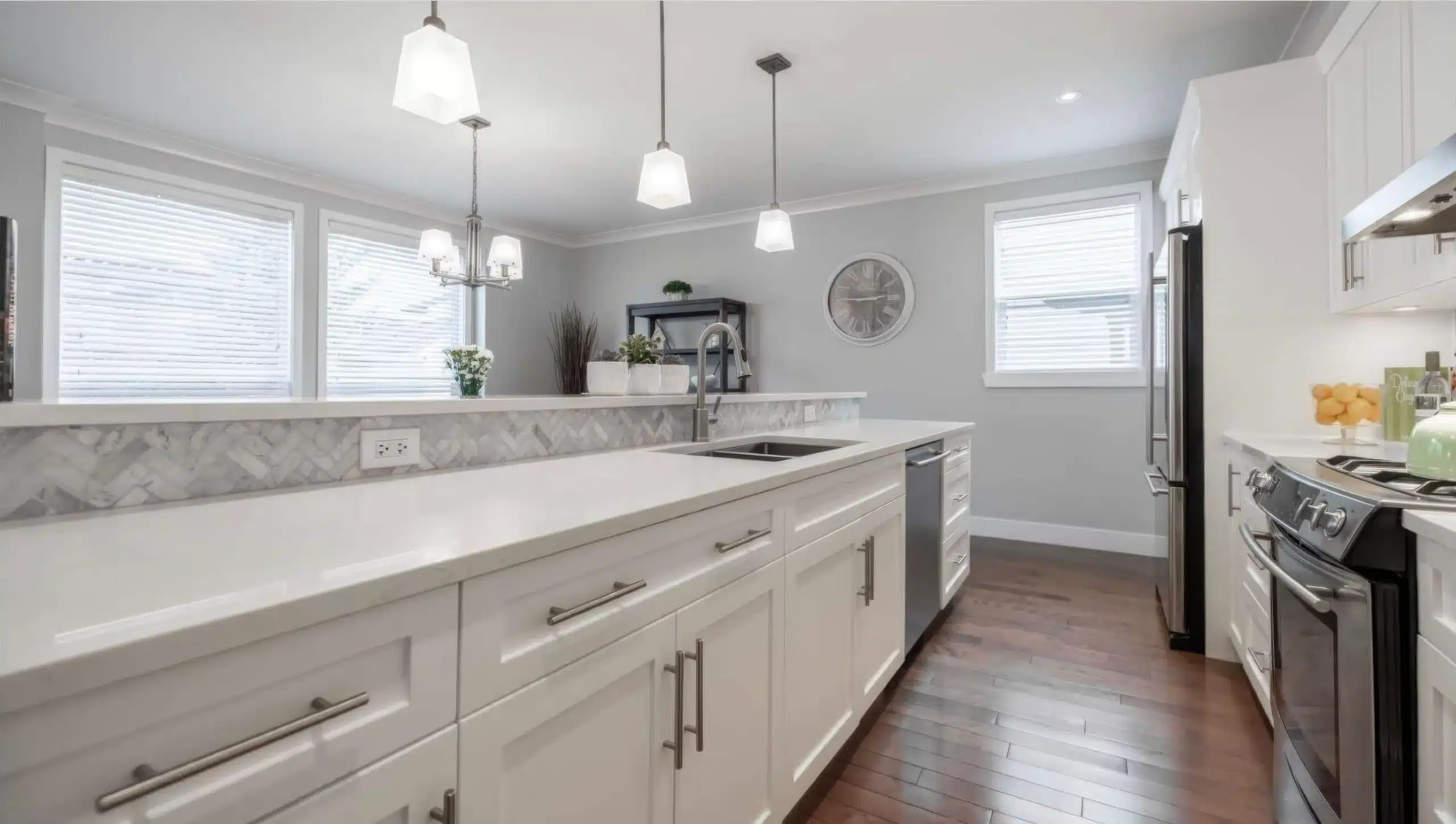
Warm Whites Work Best When the Other Whites Agree
Warm whites can create a calm background for wood cabinetry, stone, brass, black hardware, and mixed natural finishes.
The challenge is matching the existing whites. A creamy wall can look yellow beside a cooler white cabinet, while a bright white wall can make ivory tile or counters look dull.
Compare wall, cabinet, trim, and backsplash whites side by side before approving the final shade.
Muted Greens Can Bridge Wood, Stone, and Warm Metals
Sage, olive, eucalyptus, and gray-green families can work well when a kitchen includes wood, cream, stone, black, brass, or bronze finishes.
Green can shift warmer or cooler depending on the product and lighting. Test it beside the cabinet finish and countertop instead of choosing it from a fan deck alone.
Blue Can Work as a Wall Colour or a Cabinet Accent
Blue is also a strong colour family in the 2026 kitchen research. A softened blue-gray or blue-green wall can create a quieter look, while navy or another deep blue on an island creates stronger contrast.
Choose the role before the shade. A colour that works beautifully on an island may carry too much visual weight across every wall.
Natural Wood Cabinets Change the Wall Decision
The NKBA report found growing interest in wood grain, which matters for wall colour because the stain and grain already add visual movement.
When wood is the main cabinet finish, the wall colour can stay quieter or repeat a softer undertone from the countertop, backsplash, flooring, or adjoining room.
If you are still deciding between keeping visible wood and painting the cabinets, Islanders’ Choice Painting Co.’s guide to cabinet painting versus cabinet refacing can help frame the options.
Two-Tone Kitchens Need One Clear Lead Colour
A two-tone kitchen works best when one colour clearly leads and the second has a defined role. The island, lower cabinets, or a separate bank of cabinetry can carry the stronger colour.
The wall colour should support both cabinet finishes. If it works with the island but clashes with the perimeter cabinets, the palette still needs work.
For homeowners considering cabinet refinishing, Islanders’ Choice Painting Co.’s cabinet painting cost guide explains the main pricing factors.
Choose Sheen by the Exact Product and Surface
Satin, eggshell, semi-gloss, and other sheens can all perform differently depending on the paint line. Kitchen walls often need regular wiping, but that does not make one sheen the automatic answer for every wall.
Higher sheen can make drywall repairs, texture, and roller marks easier to see. Cabinet doors and drawers also need a coating system designed for repeated hand contact rather than a standard wall finish.
Choose the product and sheen together after the surface condition and cleaning needs are clear.
Do Not Let Room Size Choose the Colour for You
A smaller kitchen does not automatically need white or another very light colour. Darker or mid-tone walls can work when the cabinets, counters, trim, and lighting provide enough contrast.
Look at the balance of the entire room instead of using square footage as the only filter.
Check the Kitchen From the Adjoining Room
Many Sidney homes and condos connect the kitchen with dining or living areas. Stand in those adjoining spaces and look back into the kitchen before approving the palette.
A wall colour that feels right inside the kitchen can look disconnected when seen beside the next room. Repeating an undertone or using a quieter connector colour can make the transition feel more natural.
Test the Palette as a Group
Kitchen colour decisions should be tested together, not one sample at a time.
If the project includes a larger interior repaint, Islanders’ Choice Painting Co.’s guide to preparing for interior painting covers practical steps before work begins.
Kitchen Painting With Islanders’ Choice Painting Co.
Islanders’ Choice Painting Co. is an independently owned painting contractor founded in 2019 and serving Sidney, Victoria, Oak Bay, Saanich, Langford, Sooke, Mill Bay, Malahat, and other Greater Victoria and southern Vancouver Island communities.
Current company information lists more than 2,000 completed projects, a team of 30+ painters, full licensing and insurance, free estimates, daily communication, furniture protection, thorough preparation, and optional colour consultations.
Interior and cabinet painting projects are backed by a three-year workmanship warranty. The Sidney page also advertises a 3+ year exterior warranty, so warranty terms should be matched to the specific service during the estimate.
Frequently Asked Questions About Paint Colors for Kitchen Projects
What paint colors for kitchen walls are popular in 2026?
The 2026 NKBA report shows strong support for neutrals, greens, and blues. Use those families as a starting point, then compare them with your cabinets, counters, backsplash, flooring, and lighting.
Should I choose the cabinet colour or wall colour first?
If the cabinets are changing, choose their direction first because they carry more visual weight. If the cabinets are staying, use their finish to narrow the wall colour.
Do small kitchens need light wall colours?
No. Light colours can reflect more light, but mid-tone or deeper colours can also work when the rest of the kitchen provides enough contrast.
What sheen should I use on kitchen walls?
The best sheen depends on the exact paint product, wall condition, lighting, and cleaning needs. Choose the coating and sheen together rather than using one universal kitchen rule.
How should I test kitchen paint colours?
Compare wall and cabinet samples together beside the countertop, backsplash, flooring, hardware, and appliances. Check the palette in daylight and under the kitchen lights at night.