A scuffed corridor, a rusting railing, and a wall that looks tired after one busy season all send the same quiet message to anyone walking through your building. If your floors take a beating, your walls and metal surfaces take one too, which is why washable paint keeps showing up on the request list for warehouses, plants, and other high-traffic spaces. The honest answer is rarely a single product. It usually means matching the right finish to each surface, from a scrubbable wall coating in a packed hallway to a direct to metal paint on the doors, railings, and equipment that get touched and bumped all day. Below is a plain breakdown of what holds up, where, and why.
Key Takeaways:
Why High-Traffic Surfaces Wear Out So Fast
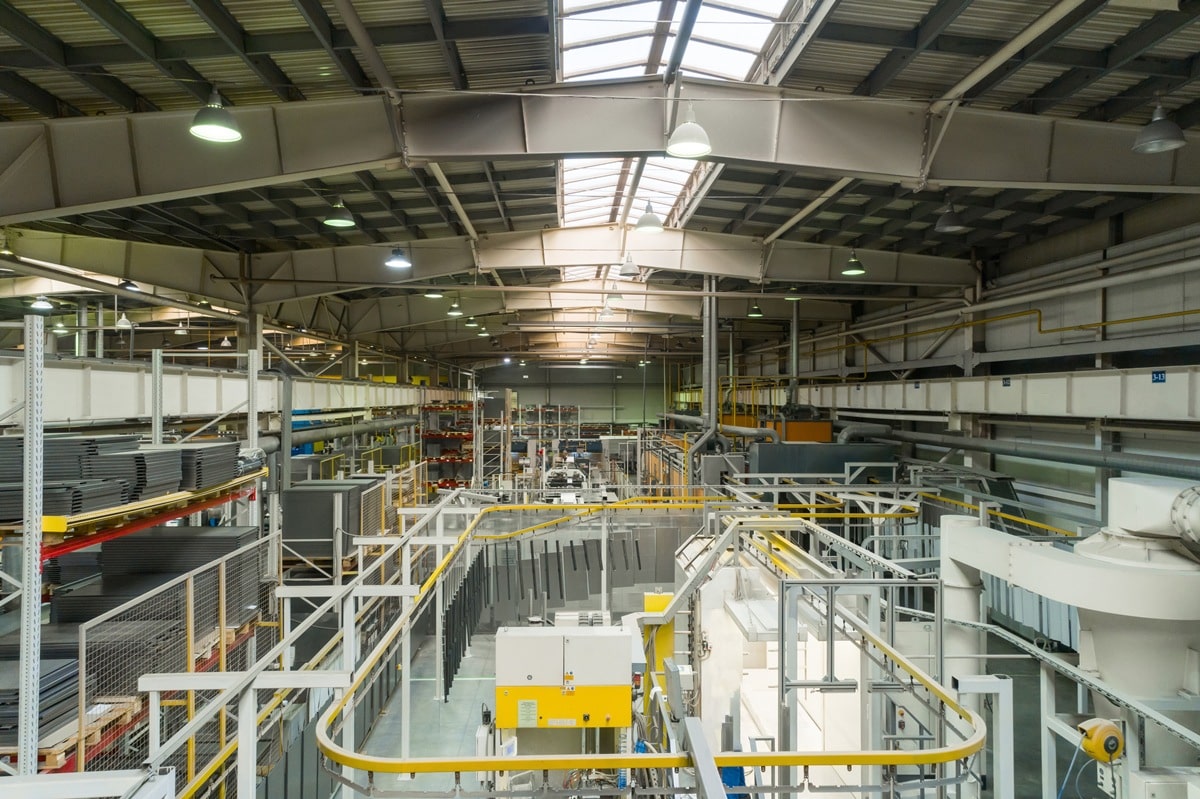
Most wear is not dramatic. It adds up. Hands and shoulders rub the same hallway spots. Carts and pallet jacks clip corners and door frames. Cleaning crews scrub the same patches with strong products. Moisture, grease, and temperature swings work on metal until rust shows at the edges. None of this is a sign anyone did anything wrong. It is simply what happens when a space stays busy.
The harder part is what it does to the people who run the place. A worn wall reads as neglect, even when the building is spotless everywhere else. A rusting handrail makes a clean plant feel older than it is. For an owner or a facility manager, those small things can pile into a bigger concern: that the space no longer reflects the standard of the work happening inside it. Paint, chosen well, quietly takes that concern off the table.
If you want a second set of eyes on which surfaces are aging fastest, our industrial painting services can start with a walkthrough, not a quote.
How We Choose Paint for High-Traffic Spaces
Before any color goes on a wall, the finish has to earn its spot. Here is what we weigh, in plain terms:
A product can be strong on one count and weak on another. The skill is in matching each surface to the finish that fits how it actually gets used. That is the whole game.
The Best Washable Paint for High-Traffic Walls
For the walls people actually touch, hallways, lobbies, stairwells, and break rooms, the workhorse is a scrubbable, scuff-resistant latex. This is where washable paint earns its keep. A good one shrugs off hand marks, cart scrapes, and shoe scuffs, then cleans up with soap and water instead of a fresh coat.
One well-known example is Benjamin Moore Scuff-X, a single-component latex built for commercial walls. It resists scuffing, stands up to repeated washing, and carries low odor and low VOCs, so a corridor can stay open while it goes on. It also includes additives that fight mold and mildew on the paint surface, which helps in damp or heavily used rooms. The point is not the brand name. It is the category: a paint engineered for cleaning, not just for color.
A flat builder-grade wall paint in these spots looks fine for a month, then starts to show every mark and burnish where someone wiped it. Spending a little more on a cleanable finish is what keeps the wall looking new between full repaints.
Direct to Metal Paint for Doors, Railings, and Steel
Metal is where a lot of industrial spaces quietly lose the battle. Door frames, handrails, bollards, structural steel, piping, and equipment all take constant contact, and bare or chipped metal invites rust. This is the job for a direct to metal paint, a coating built to bond straight onto prepared metal and hold its ground.
A common choice is the Sherwin-Williams Pro Industrial DTM acrylic line, a water-based direct to metal paint that goes onto properly prepped steel without a separate primer coat, resists corrosion and chemicals, and dries fast enough to put an area back in service the same day. Its VOC level sits under 50 grams per liter, which keeps odor low for occupied buildings. For surfaces facing heavy rust risk, a dedicated rust-inhibiting metal primer underneath adds another layer of defense.
Two things make or break a metal coating job, and neither is the paint itself. The first is prep: clean, dry, and lightly profiled metal so the coating can grip. The second is the right film thickness. Get those right, and a metal surface can go years without a touch-up.
Water-Based Epoxy for Washdown and Sanitary Rooms
Kitchens, restrooms, labs, locker rooms, and food or beverage areas live with water, chemicals, and daily cleaning. Standard wall paint cannot keep up. A pre-catalyzed, water-based epoxy can. It dries to a hard, tile-like film that handles harsh detergents, resists stains, and takes repeated washing without breaking down. It works on block, drywall, masonry, and concrete walls, which makes it a strong fit for the wet corners of an industrial building.

Antimicrobial and Specialty Options
Some spaces ask for more. In clinics, food prep areas, and other sensitive rooms, paints with built-in antimicrobial additives slow the growth of mold and mildew on the coated surface. For the hardest-working metal, like equipment and exterior steel, urethane-fortified enamels add extra abrasion and gloss retention. These are not everyday picks. They are tools for specific problems, and they are worth asking about when a room has a special demand.
A Simple Plan for Getting It Right
Choosing paint for a busy building does not have to be complicated. It comes down to three steps:
A crew that paints commercial buildings around Victoria for a living can run this whole process for you, from the first walkthrough to the last touch-up.
What the Right Choice Saves You
The payoff is not only a better-looking building, though that part is real. It is fewer repaints, less downtime, and surfaces that keep doing their job long after the crew leaves. A corridor that cleans up instead of needing a recoat. A handrail that stays solid instead of bleeding rust. A space that tells every visitor, without a word, that the operation behind it pays attention. The cost of getting it wrong shows up slowly: repeated touch-ups, early failures, and a building that ages faster than it should.
Talk to Islanders' Choice Painting Co About Your Space
Every building wears differently, so the right plan starts with seeing yours. Islanders' Choice Painting Co works with warehouses, plants, and commercial properties around Victoria, BC, and a quick walkthrough lets us sort your surfaces and lay out which finishes fit where, with clear pricing before anything begins. If a fresh round of washable paint for your walls or a coat of direct to metal paint on your steel would keep your building looking sharp and working hard, call Islanders' Choice Painting Co at 778-910-5116 or book a walkthrough today. You will get straight answers, real options, and a plan built around how your space actually runs.