
Epoxy and polyurea systems can both produce an attractive garage floor, but the names alone do not tell you which coating will perform better. The polyurea vs epoxy garage floor coating decision depends on the exact products, the condition of the concrete, moisture levels, sunlight, cure schedule, and installation process.
For homeowners in Victoria and nearby communities, moisture inside the slab deserves as much attention as the coating chemistry. This guide explains the practical differences without treating either option as the automatic winner.
Key Takeaways:
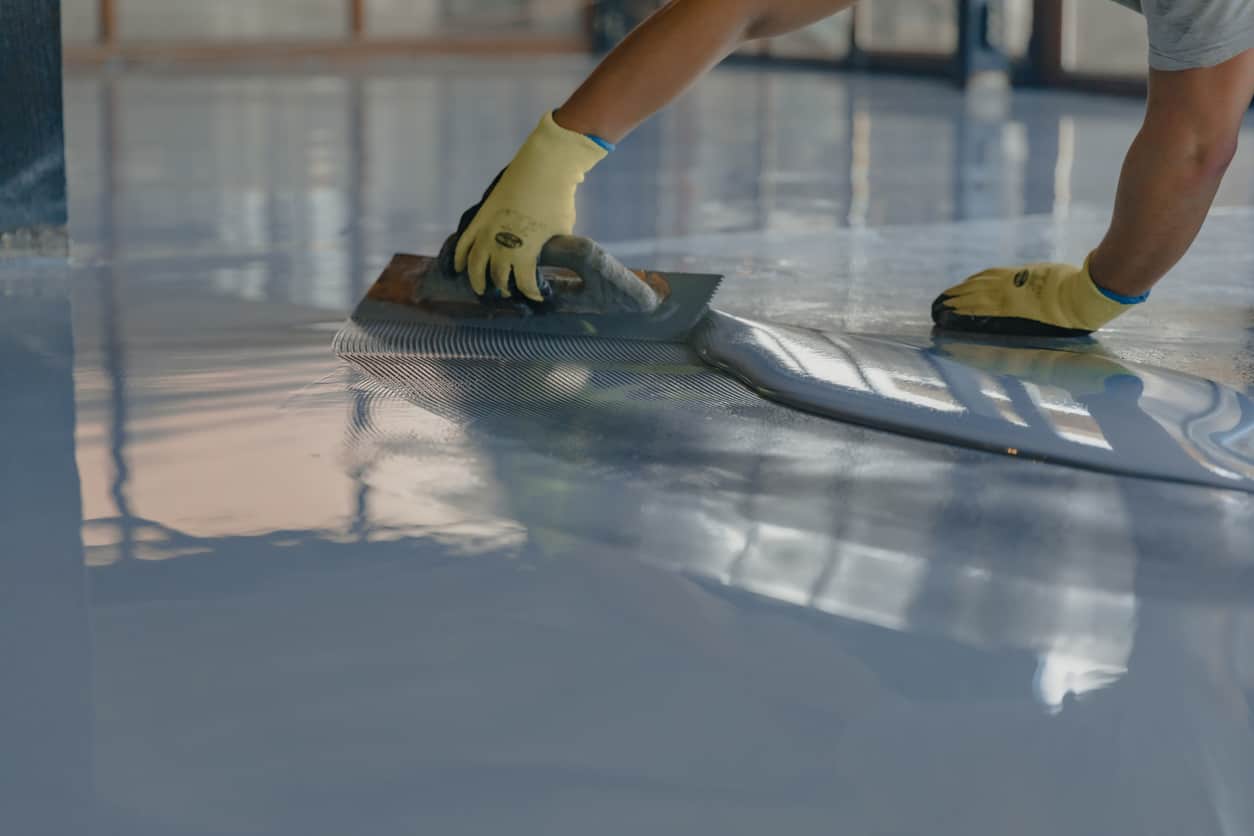
What Is an Epoxy Garage Floor System?
Epoxy is commonly made by combining a resin with a hardener. Once mixed and applied, the material cures into a hard coating that bonds to prepared concrete.
The word “epoxy” covers many products. A thin DIY kit is not the same as a professional multi-layer system with mechanical grinding, repairs, primer, body coats, decorative flakes, and a protective topcoat.
Epoxy is valued for adhesion, hardness, finish options, and chemical resistance. Standard epoxy can also change colour under repeated ultraviolet exposure, which matters near garage doors and windows. A compatible UV-resistant topcoat may be added when sunlight is a concern.
What Are Polyurea and Polyaspartic Coatings?
Polyurea is another broad coating category. Polyaspartic coatings are modified polyurea materials designed to provide more working time than very fast-reacting spray polyureas.
Many garage floor systems use more than one chemistry. A system may include an epoxy primer or body coat, a polyurea base coat, decorative flakes, and an aliphatic polyaspartic topcoat. That is why asking only “Is this epoxy or polyurea?” can lead to an incomplete answer.
Ask the installer to identify every layer and explain the purpose of each product. The full system matters more than the marketing name placed on it.
Polyurea vs Epoxy Garage Floor Coating: Practical Differences
Cure and return-to-service time
Polyaspartic and some polyurea products can cure faster than many epoxy products. That can shorten the time before light foot traffic or vehicle use. The exact schedule still depends on the product data sheet, slab temperature, air temperature, humidity, film thickness, and number of layers.
A fast cure is helpful when garage access matters, but it also gives the installer less working time. Mixing, spreading, broadcasting flakes, and maintaining a wet edge must be handled within the product’s stated window.
Sunlight and colour stability
Standard epoxy coatings can amber or chalk after repeated UV exposure. Aliphatic polyaspartic topcoats are commonly selected when colour stability near open garage doors or windows is a priority.
This does not mean every product sold as polyurea is UV stable. The installer should identify the topcoat and confirm its intended exposure.
Hardness and flexibility
Epoxy is known for hardness and adhesion. Polyurea and polyaspartic products may offer more flexibility, depending on the formulation.
More flexibility does not make a coating immune to cracking or delamination. Moving cracks, control joints, weak concrete, contamination, and moisture can still damage the finished system. Concrete defects should be inspected and treated before coating.
Chemical and abrasion resistance
Both categories include products made for abrasion, oil, road residue, and common household chemicals. Resistance differs by product, concentration, exposure time, and cleanup.
Ask for the technical data for the exact topcoat rather than relying on a general statement that one chemistry resists every spill better.
Price
Epoxy systems often have a lower starting price, but the final estimate depends on the slab, repairs, grinding, number of layers, finish, access, and topcoat. Polyurea or polyaspartic systems may cost more due to material pricing and faster application windows.
A fair comparison should use the same preparation and finish expectations. A one-coat estimate should not be compared with a repaired, mechanically prepared, multi-layer system as if they are the same product.
Why Concrete Moisture Matters in Victoria
A coating can separate from concrete when moisture vapour, contaminants, weak surface paste, or poor preparation interfere with adhesion. This risk applies to epoxy, polyurea, polyaspartic, and hybrid systems.
Victoria’s wet seasons make slab assessment worth discussing, but outdoor humidity alone does not prove that a garage slab has a moisture problem. The slab must be evaluated instead of diagnosed by climate assumptions.
The ICRI concrete slab moisture testing program covers recognised test methods used to measure moisture in concrete. The coating manufacturer’s limits should then be compared with the test results.
Grinding also matters. Mechanical preparation removes weak material and contamination while creating the surface profile required by the selected coating. Moisture testing and grinding solve different problems, so one should not be treated as a substitute for the other.
Which Garage Floor Coating Should You Choose?
A polyaspartic or hybrid system may fit a garage that needs faster return to service or receives regular sunlight near the door. An epoxy system may fit a homeowner who wants a professional coated floor and has more flexibility in the cure schedule.
Neither answer is complete until the slab has been inspected. Moisture, cracks, oil contamination, old coatings, weak concrete, and previous repairs can affect the recommended system and price.
Before choosing, ask for these details:
How Islanders’ Choice Handles Residential Epoxy Floors
Islanders’ Choice Painting Co. installs residential epoxy floor coatings for garages, basements, laundry rooms, workshops, and other concrete spaces across Greater Victoria.
The published process includes a surface assessment, crack repairs, grinding to remove contaminants or old coatings, primer and base coats, decorative options, and a protective clear topcoat. Available finishes include solid colour, decorative flake, and metallic systems.
Islanders’ Choice currently promotes professional epoxy installations. The company’s website does not state that every project uses polyurea or polyaspartic products, so homeowners comparing those options should ask which exact coating system is proposed for their garage.
Projects include communication about cure times and access, along with a three-year workmanship warranty. The recommendation should be based on the slab, intended use, finish goals, and schedule rather than a fixed answer for every home.
Frequently Asked Questions About Garage Floor Coatings
Is polyaspartic the same as polyurea?
Polyaspartic coatings are modified polyurea materials. The terms are often used together in sales language, but the exact formulation and place within the coating system should be confirmed.
Is polyurea always better than epoxy?
No. Product quality, slab condition, preparation, moisture, application, and the complete layer system affect performance. Each option has products made for different uses.
Will epoxy always turn yellow?
Standard epoxy can change colour under UV exposure. The degree varies, and a UV-resistant topcoat may reduce visible colour change. Garages with little sunlight may see less of this issue.
Can a garage floor be coated if the concrete is damp?
That depends on measured moisture levels and the limits of the selected products. The slab should be tested and compared with the manufacturer’s requirements before installation.
How soon can I park on a coated garage floor?
Return-to-service times vary by chemistry, temperature, humidity, film thickness, and the number of layers. Follow the schedule for the exact products used instead of relying on a general one-day or five-day claim.
Compare the Full Coating System Before Deciding
Homeowners in Victoria, Oak Bay, Saanich, Langford, Colwood, and nearby communities can schedule an on-site assessment with Islanders’ Choice Painting Co.
The consultation can cover the condition of the concrete, preparation needs, finish options, cure schedule, and the epoxy system proposed for the space. When you are ready, contact Islanders’ Choice Painting Co. at 778-910-5116.